
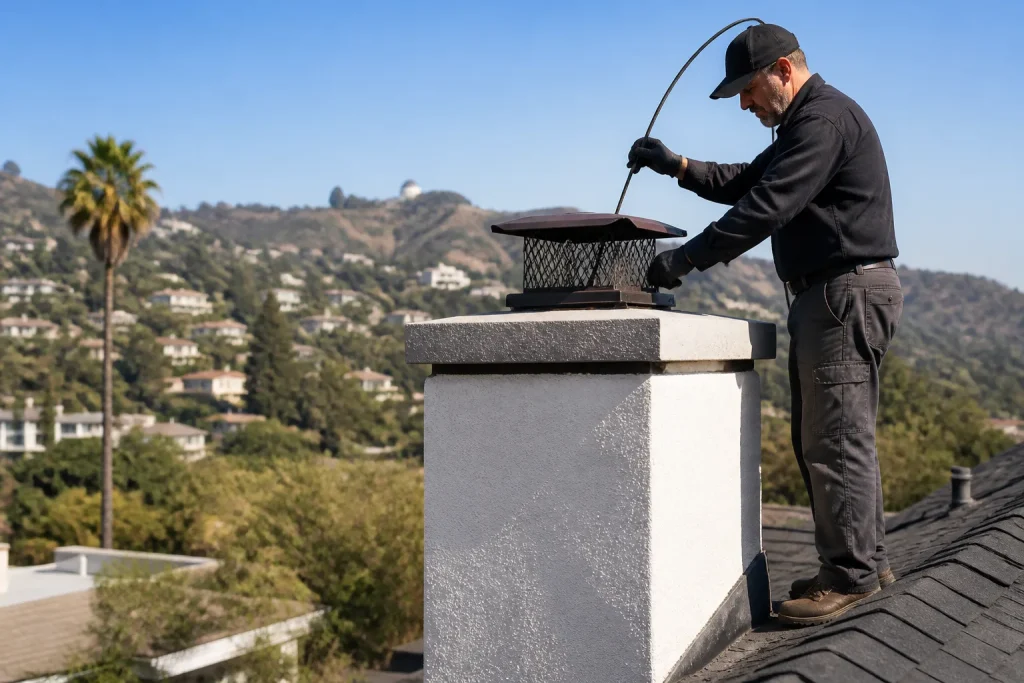
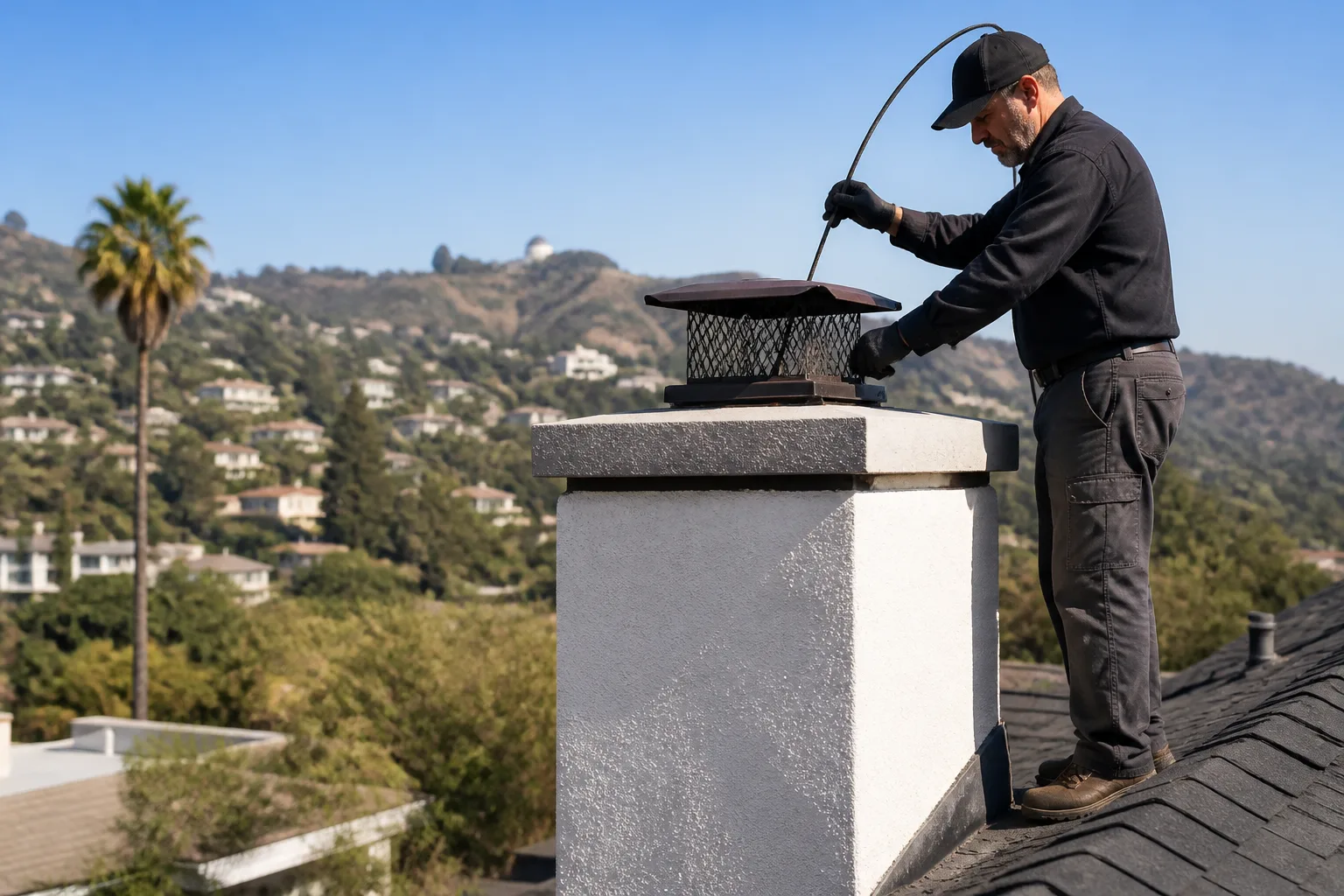
DuraFlex Chimney Sweep in Los Feliz: A Homeowner’s Guide
DuraFlex is a flexible stainless steel chimney liner system that solves a problem rigid liners can’t: it follows the bends, offsets, and irregularities inside an older masonry flue without tearing it apart. In Los Feliz, where pre-war Craftsman and Spanish Colonial homes often have chimneys that jog sideways or narrow unexpectedly, this matters more than most installers admit. If you’re weighing a liner decision and want straight answers, give us a call at (833) 467-6692. We answer 24/7.
What DuraFlex Actually Is (And What It’s Made Of)
DuraFlex is a corrugated flexible liner manufactured from stainless steel. The corrugation is the whole point: it allows the liner to bend through offset flue runs without kinking or collapsing. Rigid liner sections, by contrast, come in straight lengths that require elbows and adapters at every change of direction. In a flue with two offsets and a dog-leg near the smoke shelf, a rigid system becomes a project. DuraFlex becomes a straightforward installation.
The alloy grade matters, and this is where installers either earn their keep or gloss over details. DuraFlex is produced in two common grades: 316L and 304 stainless. The 316L alloy contains molybdenum, which gives it meaningfully better resistance to the acids produced when wood exhaust condenses inside a flue. For a wood-burning fireplace in Los Feliz that gets used regularly during our mild winter months, 316L is the correct call. For a gas appliance, which produces a different exhaust chemistry, 304 is generally acceptable. A technician who can’t explain which alloy they’re quoting and why isn’t doing you a favor.
Why Los Feliz Chimneys Are Different (And Why It Matters)
Homes built in Los Feliz before World War Two rarely have the straight, uniform flues you’d find in a tract house from the 1980s. Masonry techniques varied from crew to crew. Clay tile liners were set by hand. Settlement over decades shifted things slightly. The result is that many local flues have interior dimensions that pinched or wandered before anyone ever thought about installing a stainless liner.
We see this regularly when we perform a chimney sweep and inspect the flue with a camera. The clay tiles look fine at the top and bottom, but the middle section runs at a slight diagonal, or the offset above the firebox is tighter than code would allow today. That’s precisely the geometry where DuraFlex outperforms rigid liner. You feed it down, it follows the path, and the corrugated wall holds its shape around the bends. Rigid liner in that same flue means breaking out tiles, opening the masonry, or forcing sections together at awkward angles that choke draft performance.
If a contractor tells you every chimney can take a rigid liner, they’re either wrong or they’re planning destructive work you haven’t been told about yet.
How Proper DuraFlex Installation Works
A correct DuraFlex installation is a system, not a tube drop. Here’s what should happen, in order:
- Sizing to the appliance, not the flue. The liner’s inside diameter must match the BTU output of the stove, insert, or fireplace it serves. This is the most common installation error we encounter. An undersized liner restricts draft and causes smoke to spill into the room. An oversized liner cools exhaust gases too quickly, which increases creosote deposition. Neither mistake is immediately obvious to a homeowner, which is why the math matters.
- Insulation wrap. A proper installation includes an insulation wrap around the liner. This keeps flue gases hotter as they rise, which improves draft and reduces creosote formation. It also protects the surrounding masonry from heat transfer in chimneys with minimal clearance to combustibles.
- Top plate and termination cap. The liner terminates at the top with a plate that seals the flue opening and a cap rated for the appliance type. The cap keeps rain, birds, and debris out. The plate is what prevents downdrafts and keeps the liner from shifting.
- Connection at the appliance. The liner connects to the stove or insert with the correct connector and is sealed properly. This is where carbon monoxide enters the living space if it’s done wrong.
When we install DuraFlex in Los Feliz homes, the job includes all of these components. We stock DuraFlex systems, which means the liner, insulation, top plate, and cap are on hand when we arrive, not ordered after we leave.
What Installation Break-In Looks Like (And Why It’s Skipped Too Often)
A new stainless liner needs a break-in period before you build a large, hot fire. The manufacturing process leaves residual oils on the metal surface. The first few fires burn those off, and they produce an odor that some homeowners mistake for a problem. It’s not a problem, but it does mean you shouldn’t load the firebox with your best dry oak on day one and walk away expecting a perfect evening.
The correct sequence is several small, low-intensity fires spaced over the first week or two of use. This gradually cures the liner and lets the insulation settle. After that, the first post-installation inspection should verify that the liner hasn’t shifted at the top plate, that the cap is seated correctly, and that draft is pulling as expected. Any installer who hands you the invoice and disappears without explaining this process isn’t finishing the job.
This is the point where a homeowner in Los Feliz should ask a direct question: “What does the break-in procedure look like, and will you come back to verify the install?” If the answer is vague, call someone else. We walk every customer through this because we’ve seen the alternative too many times.
DuraFlex vs. HeatShield: When Is a Liner Even the Right Call?
Not every damaged flue needs a DuraFlex liner. In some cases, the clay tiles are cracked or spalled but the flue is otherwise straight and structurally sound. That’s where HeatShield, a ceramic resurfacing material, can be the more economical choice. We’re certified to apply HeatShield, and we keep DuraFlex on the shelf precisely because the right answer depends on what the camera shows.
Think of it this way: if the flue path is open and straight but the tile surfaces are compromised, HeatShield restores them without changing the flue dimensions. If the path itself is offset, irregular, or too small for the appliance, DuraFlex is the liner that accommodates the geometry. A company that only sells one solution has an incentive problem. We carry both because Los Feliz chimneys present both situations.
The call you should not make is to live with it. A flue with cracked tiles or missing mortar joints is how chimney fires start, and that’s a fact no brand name changes. Our Chimney Sweep Los Feliz approach is to inspect every flue with a camera and show you what we see before recommending anything. If the liner can wait, we’ll say so. If it can’t, you’ll know why.
What This Means For Your Dryer Vent
While a chimney liner is the safety headline, the dryer vent deserves a mention because Los Feliz homes often share the same design era. Older houses frequently have long, convoluted dryer vent runs that collect lint faster than anyone expects. Lint is combustible, and a clogged vent is one of the leading causes of household fires in the United States. We offer dryer vent cleaning alongside our chimney services for exactly this reason: both are fire hazards that operate on neglect, and both can be handled in the same visit by the same crew.
You don’t need separate phone calls and separate appointments. One call, one crew, both hazards addressed. When we’re at a home installing a DuraFlex liner, checking the dryer vent is a natural addition because we’re already there with the tools and the experience. It’s not an upsell. It’s the other thing that burns houses down.
When to call a pro: If you notice smoke entering the room when the fireplace is lit, a persistent odor from the fireplace even when it’s not in use, flaking tile pieces in the firebox, or a dryer that’s taking longer than usual to finish a load, call (833) 467-6692. We answer 24/7. Fast dispatch from 7am to 7pm, Sunday through Friday. These are the signs that something is already wrong, and none of them improve with time.
The Bottom Line
DuraFlex exists for chimneys that rigid liners can’t handle, and many of Los Feliz’s older homes have exactly those chimneys. The key decisions are alloy grade, liner diameter, insulation, and the termination system. Skip any one of those and you’ve bought a partial fix. A proper installation includes a break-in procedure and a post-install inspection. And if someone quotes you a liner without first looking at the flue with a camera, get a second opinion.
If you’re in Los Feliz and need help evaluating whether DuraFlex is right for your chimney, Chimney Sweep Los Feliz offers free estimates. Call (833) 467-6692. We answer 24/7. You’ll get a straight answer about what your flue needs, and if it doesn’t need anything, we’ll tell you that too.
Frequently Asked Questions
How long does a DuraFlex stainless steel liner last?
A properly installed and maintained DuraFlex liner in 316L alloy typically lasts 15 to 25 years in a wood-burning application. The variables are how often the fireplace is used, what’s burned in it, and whether the flue is swept on a regular schedule. An annual inspection catches early issues before they shorten the liner’s life. For exact guidance on your setup, call (833) 467-6692 and we’ll walk through it.
Is DuraFlex safe for wood-burning fireplaces?
Yes, specifically the 316L alloy version. That grade is rated for solid fuel applications because it resists the acidic condensate that wood exhaust produces. We use 316L DuraFlex for wood-burning installations in Los Feliz and 304 for gas where appropriate. The alloy choice is not a detail; it’s a safety decision.
Do I need a permit to install a chimney liner in Los Feliz?
Most cities require a permit for liner installation because it’s a modification to a venting system. Los Feliz falls under the City of Los Angeles building jurisdiction, which generally requires a permit for relining work. We recommend asking your city’s building department for their current requirements, and any reputable installer should handle the permit process as part of the job rather than leaving it to you.
How often should a chimney with a DuraFlex liner be swept?
The National Fire Protection Association recommends an annual inspection for chimneys serving solid fuel appliances, and a cleaning whenever creosote buildup reaches 1/8 inch. In practice, a fireplace used regularly during Los Feliz’s winter months should be swept once a year. A DuraFlex liner doesn’t eliminate creosote; it contains it. Call (833) 467-6692 to schedule a sweep. We answer 24/7, and estimates are free.
Written by the team at Chimney Sweep Los Feliz, serving Los Feliz since 2011.
Need Chimney Cleaning Help?
Call Chimney Sweep Los Feliz - licensed & insured, here with fast help in Los Feliz.
(833) 467-6692